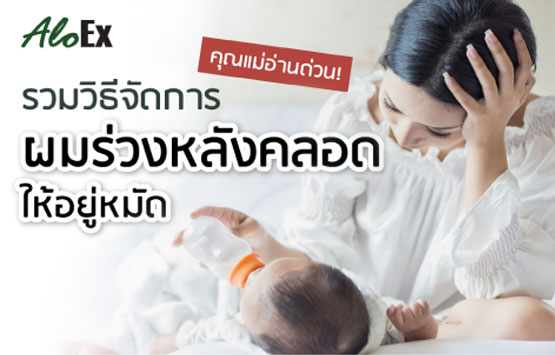
Don't be discouraged if you're experiencing hair loss, mom! We're here to answer all your questions about postpartum hair loss. What causes it, how can you care for your hair, and is it dangerous? Let's find out with AloEx. What is postpartum hair loss? Postpartum hair loss is a condition that many new mothers experience after giving birth. It is characterized by temporary, excessive hair shedding, which can be observed as an abnormal amount of hair falling out. Mothers may lose as many as 300–500 strands of hair per day, which is significantly more than the typical daily loss of about 100 strands. Only strands per day. In some mothers who experience severe postpartum hair loss, this may lead to thinning hair or even baldness. Causes of Postpartum Hair Loss Postpartum hair loss in mothers can be caused by three main factors: Changes in estrogen hormones Changes in estrogen hormones in the body are the most significant cause leading to postpartum hair loss. Since estrogen hormones help nourish hair, making it stronger and able to grow longer, estrogen levels increase during pregnancy and then drop suddenly after childbirth. This causes the hair growth cycle to return to normal, leading to significant postpartum hair loss. In addition to having abnormally low levels of estrogen, which can lead to postpartum hair loss, there is also the hormone dihydrotestosterone (DHT), which contributes to hair loss. Furthermore, a deficiency in essential nutrients for scalp and hair care can result in postpartum hair loss, as mothers may not receive adequate nutrients to support hair growth. During pregnancy, a mother must allocate a portion of nutrients to nourish the baby, which can unintentionally lead to nutritional deficiencies. While these deficiencies may not cause noticeable hair loss in the mother, when combined with hormonal changes, particularly in estrogen levels, they can make hair more fragile, weak, and prone to shedding after childbirth.